What is GHK-Cu?
GHK-Cu (Glycyl-L-Histidyl-L-Lysine-Copper) is a naturally occurring copper-binding tripeptide found in human plasma, saliva, and urine. First isolated from human plasma in 1973 by Dr. Loren Pickart, GHK-Cu has become one of the most studied peptides in skin biology and regenerative research.
The peptide's ability to bind copper ions (Cu2+) with high affinity is central to its biological activity. This copper complex influences numerous genes involved in tissue repair, anti-inflammatory responses, and collagen synthesis.
The Science of GHK-Cu
Natural Occurrence
GHK-Cu is found throughout the body:
Plasma Levels:
Sources:
Copper's Role
Copper is essential for numerous enzymes:
| Enzyme | Function |
|---|---|
| Lysyl oxidase | Collagen cross-linking |
| Superoxide dismutase (SOD) | Antioxidant defense |
| Tyrosinase | Melanin synthesis |
| Cytochrome c oxidase | Energy production |
GHK-Cu delivers copper to tissues in a bioavailable form.
Mechanism of Action
Gene Expression Modulation
GHK-Cu influences over 4,000 genes:
Upregulated:
Downregulated:
Wound Healing Cascade
Phase 1: Inflammation Control
Phase 2: Proliferation
Phase 3: Remodeling
Skin-Specific Effects
Collagen Benefits:
Elastin Effects:
Barrier Function:
Peptide Profile
| Property | Details |
|---|---|
| Full Name | GHK-Cu (Copper Peptide) |
| Sequence | Glycyl-Histidyl-Lysine + Cu2+ |
| Amino Acids | 3 (tripeptide) |
| Molecular Weight | ~403 g/mol (with copper) |
| Copper Content | 1 Cu2+ ion per peptide |
| Purity | 99%+ (HPLC verified) |
| Color | Blue (copper complex) |
| Form | Lyophilized powder |
Research Applications
Skin Aging Studies
Anti-Aging Research:
Photoaging:
Wound Healing Research
Acute Wounds:
Chronic Wounds:
Hair Research
Follicle Studies:
Regenerative Research
Tissue Repair:
Administration Methods
Topical Application
Most common for skin research:
Formulation Considerations:
Typical Concentrations:
Injectable (Research)
For systemic studies:
Reconstitution:
| Vial Size | Bacteriostatic Water | Concentration |
|---|---|---|
| 50mg | 2ml | 25mg/ml |
| 100mg | 4ml | 25mg/ml |
Use our peptide calculator for precise calculations.
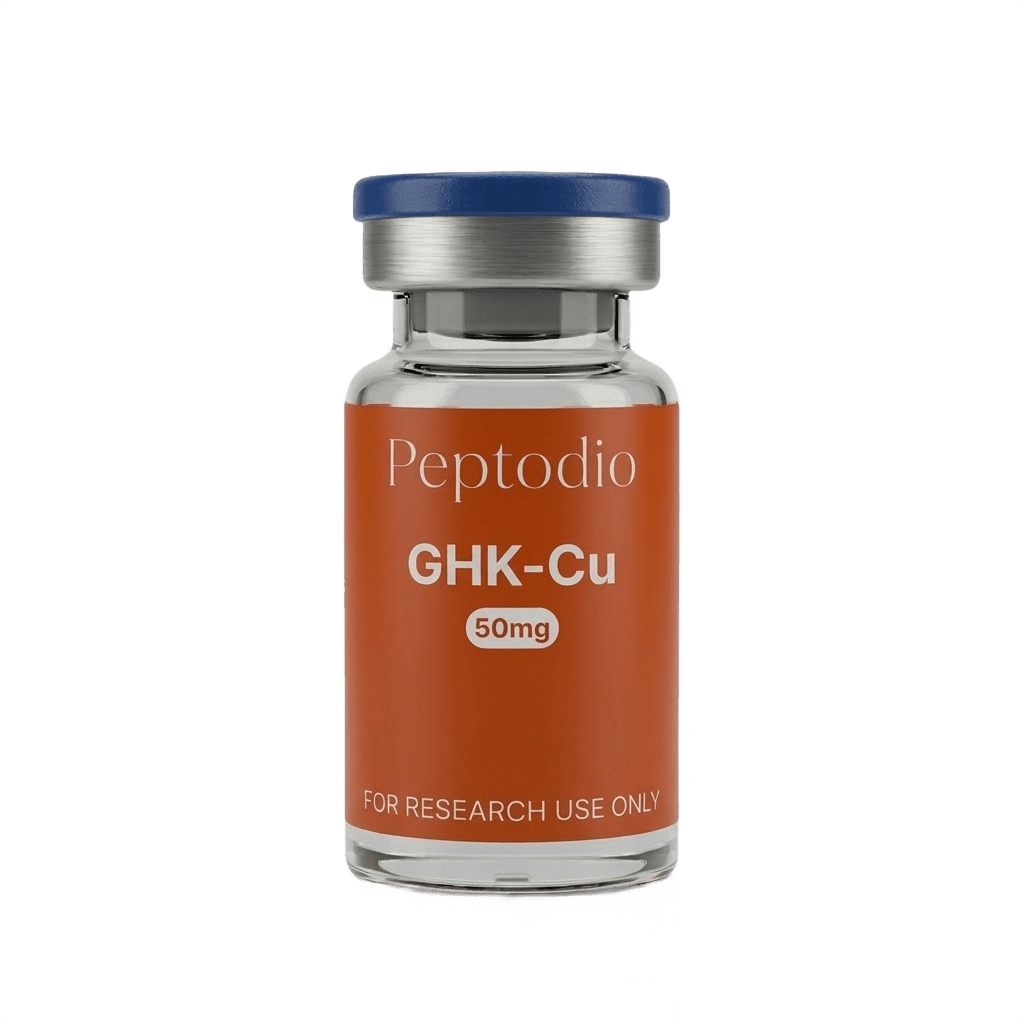
GHK-Cu
50mg • 99%+ Purity
$27.99
In Stock
Subcutaneous:
GHK-Cu vs Other Peptides
Comparison with Skin Peptides
| Peptide | Primary Action | Best For |
|---|---|---|
| GHK-Cu | Copper delivery, collagen | Overall regeneration |
| Matrixyl | Collagen stimulation | Anti-wrinkle |
| Argireline | Muscle relaxation | Expression lines |
| EGF | Cell proliferation | Wound healing |
GHK-Cu vs BPC-157
| Aspect | GHK-Cu | BPC-157 |
|---|---|---|
| Origin | Natural (plasma) | Gastric protein |
| Mechanism | Copper delivery, gene modulation | Multi-pathway |
| Primary Use | Skin, regeneration | Systemic healing |
| Administration | Topical common | Injectable common |
See our BPC-157 guide for comparison.
Storage Guidelines
Lyophilized Form
Reconstituted Solution
Topical Formulations
See our storage guide.
Research Protocols
Topical Studies
Variables to Consider:
Common Endpoints:
Injectable Studies
Design Considerations:
Safety Profile
Research Observations
Topical:
Injectable:
Considerations
Frequently Asked Questions
Why is GHK-Cu blue?
The blue color comes from the copper ion (Cu2+) bound to the peptide. This is characteristic of copper complexes and indicates proper copper binding. The color may vary from light blue to deeper blue depending on concentration.
How does GHK-Cu differ from other copper peptides?
GHK-Cu is the most researched copper peptide with specific biological activity. Other copper peptides exist but may have different binding characteristics or activity profiles. GHK-Cu's tripeptide sequence provides optimal copper delivery and gene modulation.
Can GHK-Cu be used with other peptides?
Research has examined GHK-Cu in combination with other peptides and active ingredients. It's generally compatible with most formulations. Specific combinations depend on research goals and formulation chemistry.
What concentration of GHK-Cu is effective?
Research has used concentrations from 0.1% to 2% for topical applications. Higher concentrations may provide more effect but also more color. Optimal concentration depends on the specific research application.
Does GHK-Cu work for hair?
Research has examined GHK-Cu for hair follicle health, and some studies suggest positive effects on hair cycle and follicle size. It may work through improved scalp circulation and follicle support. More research is ongoing.
How should GHK-Cu be stored?
Lyophilized GHK-Cu should be stored at -20°C for maximum stability. Reconstituted solutions should be refrigerated and used within 4-6 weeks. Protect from light and oxidation. Blue color should remain stable.
Related Resources
Conclusion
GHK-Cu represents a unique intersection of peptide biology and metal chemistry, offering researchers a tool to study copper's role in tissue repair and regeneration. With over 50 years of research and thousands of publications, it remains one of the most well-characterized peptides for skin and wound healing studies.
For researchers interested in skin biology, wound healing, or regenerative medicine, GHK-Cu provides a naturally-derived compound with extensive literature support.
Explore our GHK-Cu products to begin your research.
Related Regenerative Peptides
View All
This article is for informational purposes only. GHK-Cu is sold for research purposes. All research should be conducted in accordance with applicable regulations.