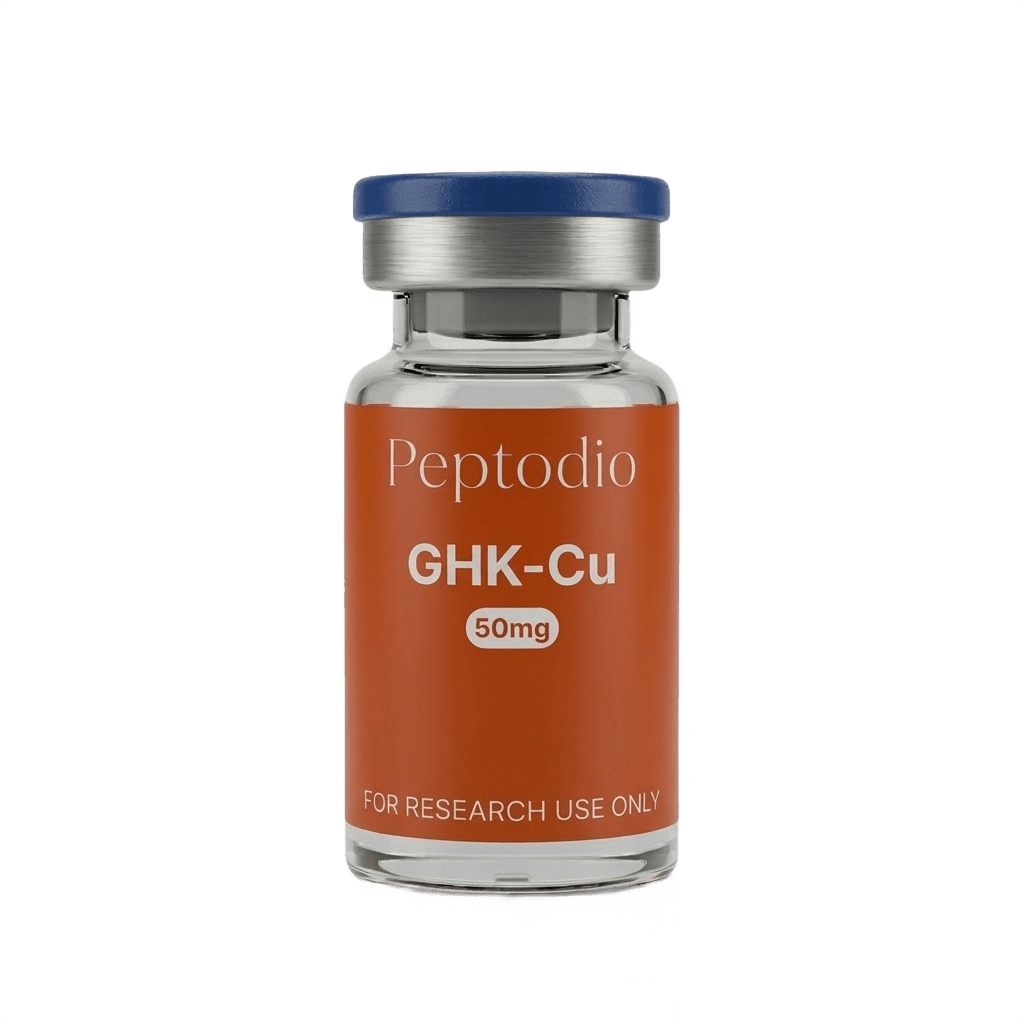
GHK-Cu
50mg · 99%+ Purity
HPLC Tested
99%+ Purity
About Our Testing
Every batch is tested by our manufacturer using HPLC analysis. Per-batch third-party testing adds significant cost and delays that would be passed to customers.
Fast Shipping
Same-day dispatch
Description
Buy GHK-Cu copper peptide 50mg at 99%+ purity. Researched for collagen synthesis, skin regeneration, and wound healing.
Research Use Only: This product is intended for laboratory research purposes only. Not for human consumption.
Research & Science
Evidence-based information about this compound
Chemical Properties
CAS Number
49557-75-7
Molecular Formula
C14H23CuN6O4
Molecular Weight
403.92 g/mol
Amino Acid Sequence
Gly-His-Lys-Cu
Also known as:
Copper Peptide, Lipo Copper, Prezatide Copper
GHK-Cu (Glycyl-L-Histidyl-L-Lysine Copper) is a naturally occurring copper-binding tripeptide found in human plasma, saliva, and urine. First isolated from human plasma in 1973, GHK-Cu has been extensively studied for its wide-ranging biological activities.
The peptide consists of three amino acids (glycine-histidine-lysine) with a strong affinity for copper(II) ions. This copper complex is essential for many of GHK-Cu's biological activities. Plasma levels of GHK-Cu decline significantly with age, from about 200 ng/mL at age 20 to 80 ng/mL by age 60.
Research has documented GHK-Cu's effects on wound healing, skin health, anti-inflammatory processes, and even gene expression modulation affecting numerous biological pathways.
GHK-Cu exerts its effects through multiple mechanisms:
- Copper Delivery: Acts as a copper transport molecule, delivering this essential trace element to tissues where it's needed for various enzymatic processes.
- Gene Expression: Research has shown GHK-Cu affects the expression of numerous genes involved in tissue remodeling, antioxidant defense, and inflammation.
- Collagen Synthesis: Stimulates collagen production and the synthesis of other extracellular matrix components.
- Anti-Inflammatory: Modulates inflammatory responses and reduces the expression of pro-inflammatory cytokines.
- Antioxidant: Enhances antioxidant defense mechanisms and reduces oxidative damage.
- Growth Factor Modulation: Affects the production and activity of various growth factors involved in tissue repair.
GHK-Cu has been extensively researched for its effects on skin health and aging:
- Collagen Production: Studies show GHK-Cu stimulates collagen types I, III, and IV production in skin fibroblasts.
- Elastin Synthesis: Research indicates increased elastin production, contributing to skin elasticity.
- Wound Healing: Clinical studies demonstrate accelerated wound healing and improved scar appearance.
- Skin Remodeling: Evidence suggests GHK-Cu promotes healthy extracellular matrix remodeling.
- Antioxidant Effects: Provides protection against oxidative damage associated with aging.
These effects have made GHK-Cu popular in both research and cosmetic applications.
Research has revealed GHK-Cu's remarkable effects on gene expression:
- Broad Modulation: Studies using gene array analysis show GHK-Cu affects the expression of over 4,000 genes.
- Regenerative Genes: Upregulates genes associated with tissue repair, stem cell function, and protein synthesis.
- Anti-Inflammatory: Suppresses expression of genes involved in chronic inflammation.
- Antioxidant Genes: Increases expression of antioxidant enzyme genes.
- DNA Repair: Research suggests effects on DNA repair pathway genes.
This broad influence on gene expression may explain GHK-Cu's diverse biological effects across multiple systems.
Sources:
This information is provided for educational purposes only and is based on published scientific research. This product is intended for research use only.